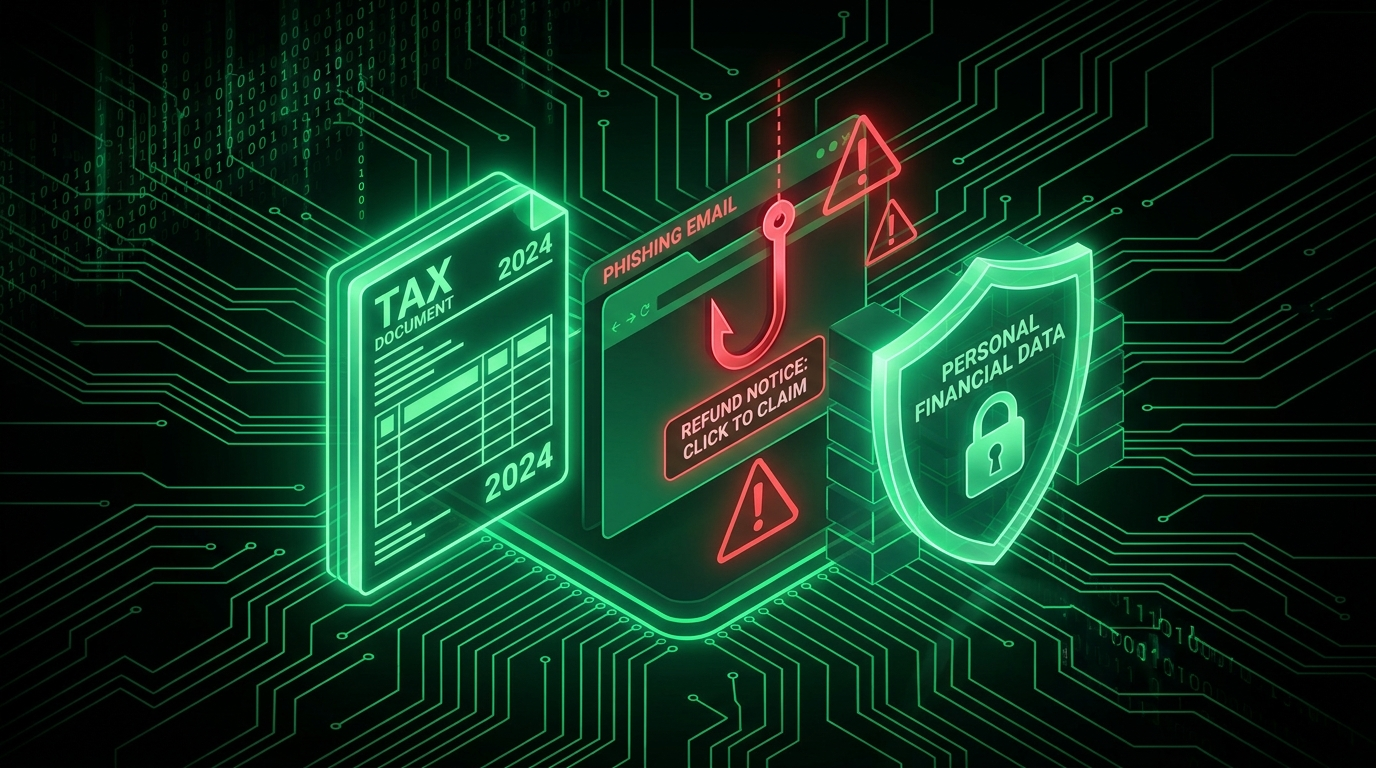
Why Tax Season Is Prime Scam Time
Taxes combine everything scammers love: money, a powerful authority (the tax agency), genuine confusion, and fear. During tax season you're expecting official communications and refunds, so a fake one fits right in. Scammers impersonate the IRS, HMRC, or your local tax authority with fake refund offers and terrifying threats, aiming for your personal data, your money, or a fraudulent refund filed in your name. Recognising the patterns keeps you safe.
The Two Flavors of Tax Scam
1. The Refund Lure ("You're owed money!")
An email, text, or call claims you're due a refund and asks you to "verify your details" or "claim it" via a link. The link leads to a fake tax-authority page harvesting your personal and financial information, exactly the data needed for identity theft. The bait is pleasant (free money) rather than scary, which lowers your guard.
2. The Threat ("You owe money, pay now or else!")
The opposite approach: aggressive claims that you owe back taxes and face arrest, lawsuits, or deportation unless you pay immediately, often demanded via gift cards, wire transfer, or cryptocurrency. The fear and urgency are designed to bypass your judgment. This is pure social engineering.
The Dead Giveaways
- Contact method: Tax authorities generally initiate contact by physical mail, not email, text, or a threatening phone call. An unexpected email or call claiming to be the tax agency is suspect by default.
- Payment demands: No legitimate tax authority demands payment via gift cards, wire transfer, or crypto. Ever. That request alone proves it's a scam.
- Urgency and threats: Real tax matters have due process and written notices, not "pay in the next hour or be arrested."
- Requests for full personal data via a link: the tax authority already has your information; a page asking you to "verify" your SSN, bank details, and more is harvesting it.
- Links and attachments: Fake login pages and malware-laden "tax forms." Never log in or open attachments from these messages.
The tax authority is not going to email you a refund link or call to threaten your arrest over gift cards. Both the carrot ("free refund") and the stick ("pay now or jail") are scammer scripts. Recognise the script and the spell breaks.
How to Protect Yourself and Your Refund
- File early. Refund fraud works by a scammer filing in your name before you do. Filing early shrinks that window, one of the most effective protections.
- Never act on unsolicited tax messages. Don't click links, call back numbers from the message, or provide details. Contact the tax authority directly using their official website or a number you look up independently.
- Protect the accounts involved: your email (where tax documents and refund info may land) and any tax-software account need strong 2FA (our Gmail guide). A compromised email is a goldmine for tax fraud.
- Use an Identity Protection PIN if your tax authority offers one (the IRS does): it prevents anyone filing in your name without it.
- Guard your tax ID number. It's the key to tax identity theft; share it only through legitimate, expected channels.
The Account-Security Foundation
Tax scams often chain off a compromised email or reused password. The basics matter here:
- Strong 2FA on email (refund notices, tax documents, and reset links flow through it).
- Unique passwords so a breach elsewhere doesn't expose your tax-software or financial accounts (our generator).
- Recognise the phishing patterns generally, not just at tax time (our phishing guide).
If You've Been Targeted or Caught
- Gave up personal/financial data? Contact your tax authority's identity-theft unit, and consider a credit freeze. Watch for fraudulent activity.
- Entered credentials on a fake page? Change that password and anywhere reused, and enable 2FA (our breach response guide).
- Paid a scammer? Contact your bank/card issuer immediately; gift card and wire payments are hard to recover, so act fast.
- Report it to the tax authority and relevant fraud reporting body, it helps warn others.
Frequently Asked Questions
How do I know if a message is really from the tax authority?
Default to skepticism for any email, text, or call, since tax authorities usually initiate contact by mail. Don't use the contact details in the message. Instead, go to the official tax-authority website (typed yourself) or call a number you look up independently to verify whether they actually need something.
The message has an official logo and looks real. Isn't that legitimate?
Logos and official-looking formatting are trivial to copy and prove nothing (our phishing guide explains this). Judge by the contact method, the demands (especially payment type), and by verifying through official channels, never by how authentic the design looks.
What is tax refund identity theft?
A criminal uses your stolen personal information (name, tax ID) to file a fake tax return and claim your refund before you file. You discover it when your real return is rejected as "already filed." Filing early and using an Identity Protection PIN are the main defences.
Why do scammers ask for gift cards?
Because gift card payments are fast, hard to trace, and nearly impossible to reverse, ideal for criminals. This is also the clearest red flag: no government agency or legitimate creditor accepts gift cards. The instant someone demands payment that way, you know it's a scam.
Does 2FA help against tax scams?
Indirectly but importantly: tax fraud frequently rides on a compromised email account (holding your tax documents and reset links) or reused passwords. Strong 2FA on your email and financial accounts closes those doors, so a phished password elsewhere doesn't cascade into tax identity theft. It's part of the foundation, alongside recognising the scams themselves.