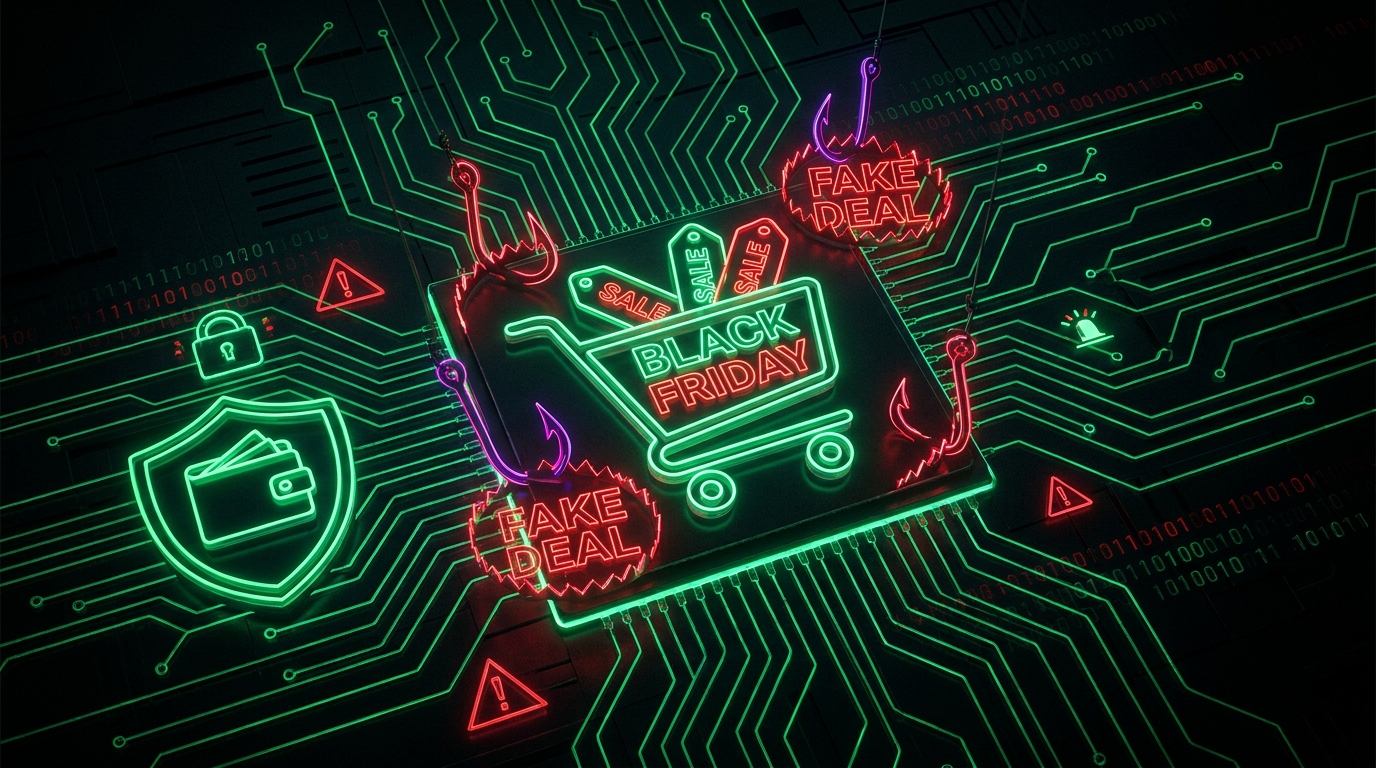
Why Black Friday Is a Scammer's Favorite Season
Everything that makes you cautious the rest of the year gets suspended on Black Friday. You expect unbelievable deals, so a fake one blends in. You expect urgency ("only 3 left!"), so scam pressure feels normal. You're making lots of purchases, so extra shipping and receipt emails don't raise eyebrows, perfect cover for phishing. Scammers plan for this window all year. Here's how to enjoy the sales without becoming a statistic.
The Main Black Friday Scams
1. Fake Deal Sites and Lookalike Stores
Scammers build convincing fake stores (or clone real ones) advertising impossible discounts on hot items. You pay; nothing arrives, and your card details are stolen. Signs:
- Deals too good to be true (a current-gen console at 80% off is bait).
- Ads on social media leading to unfamiliar stores.
- Slightly-wrong domain names mimicking real retailers (our phishing guide covers lookalike domains).
- No secure checkout, only bank transfer or gift card payment, or a brand-new site with no track record.
2. Phishing Shipping and Order Emails
"Your package couldn't be delivered, confirm details" and "There's a problem with your order" emails spike during the shopping season, because everyone genuinely is expecting deliveries. They lead to fake login or payment pages. Defence: never click links in these emails, go to the retailer or courier site directly and check your orders there.
3. Fake Discount Codes and Gift Card Scams
"Free $500 gift card" offers and too-good discount codes harvest your data or payment info. And the classic: anyone asking you to pay with gift cards is a scammer, always. Gift cards are for gifting, never for paying a "retailer" or "support agent."
4. Social Media and Marketplace Traps
Fake giveaways, hijacked accounts posting scam deals (our Facebook and Instagram guides on account takeover), and marketplace listings with prices designed to rush you into off-platform payment.
How to Shop Safely
- Go to stores directly. Type the retailer's address or use your bookmark, don't click deal links from emails, ads, or DMs. This one habit defeats most scams.
- Verify the site: correct domain, HTTPS (though remember the padlock alone isn't proof of honesty, per our HTTPS guide), real contact info, and reviews from outside the site itself.
- Use a credit card or trusted payment service, not debit or bank transfer. Credit cards offer fraud protection and chargebacks; a scammed debit card is your actual money gone.
- Watch for urgency and pressure. Real sales don't require you to act in the next 90 seconds or pay in gift cards.
- Check your statements during and after the season for unfamiliar charges.
The Account-Security Angle
Your shopping accounts get busy (and targeted) during this period. Make sure they're protected:
- 2FA on Amazon and your shopping accounts (our Amazon guide), so a phished password alone can't be used.
- 2FA on PayPal and payment accounts (our PayPal guide).
- Unique passwords so a leak from one store doesn't open the others (our generator).
The Black Friday mindset, expecting deals, urgency, and shipping emails, is exactly the mindset scammers exploit. Keep one rule sacred: reach every store and track every order by going there yourself, never through a link someone sent you.
If You've Been Scammed
- Contact your bank or card issuer immediately to dispute the charge and freeze the card if needed.
- Change the password on any account whose credentials you entered on a fake site, and anywhere you reused it (our breach response guide).
- Enable 2FA on affected accounts if it wasn't on.
- Report the scam to the relevant consumer protection body and the platform where you found it.
Frequently Asked Questions
How can I tell a fake store from a real one?
Check the exact domain (lookalikes are common), look for reviews and history from outside the site, verify real contact details, and be suspicious of prices far below everyone else and of gift-card-only or bank-transfer-only payment. When unsure, buy from the retailer's known official site instead of a deal link.
Is it safe to click links in Black Friday emails from stores I actually use?
Safer to go directly anyway. Even legitimate-looking emails may be spoofed, and the season is full of convincing fakes. Type the retailer's address or use the app; if the deal is real, you'll find it there. This removes the risk entirely.
Why should I use a credit card instead of debit?
Credit cards offer stronger fraud protection and chargeback rights, and fraudulent charges aren't drawn directly from your bank balance while disputed. A scammed debit card is your real money, gone until (and if) recovered. For online shopping, especially during scam season, credit is safer.
Are deals on social media ever legitimate?
Sometimes, but social platforms are thick with fake ads, hijacked accounts, and scam giveaways during sales. Treat a social media deal as a lead, then go to the retailer's official site to verify and purchase, rather than buying through the social link. If the deal only exists via a sketchy link, it's likely a trap.
What's the most common Black Friday scam?
Phishing via fake shipping/order emails and fake deal sites, both exploiting the fact that you're genuinely shopping and expecting deliveries. The universal defence, go directly to stores and couriers rather than clicking links, neutralises both.